— standalone-novella
LOTUS, MUD, BLADE
A tragicomedy of eloquence and error, set in the 16th-century friction between the Siamese and Khmer empires.
“A poet-butcher, a scholar-prince, and the beautiful lie that binds them across fifteen years of war and silence.”
1515, The Mun River Valley is a frontier of “Stone and Wood.” In the ancient city of Meuang Vimayapura, the ancestral Khmer laterite temples, hospitals and palaces are being slowly overshadowed by the “New Teak” built by the bureaucracy of the rising Siamese Kingdom of Ayutthaya. Into this landscape of cultural friction comes Preah Ponhea Chan, an exiled Khmer prince. He finds it in the talented but uneducated recruit Sorya, unaware that every eloquent word he worships is actually the work of her cousin, Moo Hring: the city’s formidable Butcher Poet.
What begins as a comedy of errors quickly turns into a brutal test of survival. Forced by a vengeful Governor to the starving frontier of Meuang Sema, Moo Hring must navigate a landscape of mud, blood, and betrayal. She survives the siege by the strength of her kitchen knife and her wit, just about.
Spanning five chapters from the vibrant marketplace of Vimaya to the silent, sunbaked green tiles of Wat Ban Tha Daeng, the novella explores the tragic gap between the “Word” and the “Flesh.” It is a sensory-rich immersion into a rarely explored era of Southeast Asian history, where the stroke of a stylus is as lethal as the strike of a blade. LOTUS, MUD, BLADE is a tragicomedy of eloquence and error that balances the sharp, rhythmic banter of Siamese courtly wit with the crushing silence of a love realised too late.
Author’s Note
LOTUS, MUD, BLADE is a work of historical fiction that explores the complexities of identity, love, and cultural exchange in 16th-century Southeast Asia. I had a great time adapting one of my favourite French story.
Despite all the changes, I wouldn’t call it a re-imagining, a term in fashion in literary circles at the moment, for two reasons: one, it is very pretentious pseudo-word and sounds like floor-engineering expression, and two, because I made the concerted decision to keep the most famous set scenes—the Nose tirade, the duel as a ballade, etc.. Re-telling is an appropriate label, because the change in settings and genders change the portent of the tale.
At 24,000 words, it stands as a short novella. As I was writing the adaptation of several oral tradition Thai tales in parallel, I kept most of the characters and the settings common. Combining the Thai tales and the French story, it might yet become a full-length novel. We will see.
Buy with universal link, all formats, all retailers.
Publication Status
Genre: Historical Literary Fiction / Tragi-comedy
Tone: Lush, Atmospheric, Witty, and Poignant
Interest: 16th-century Southeast Asia, Khmer-Siamese Cultural Friction, Literary Deception
Word count: 24,000
TLDR: A historical tragi-comedy set in Vimaya, Kingdom of Ayutthaya, c.1500. A mildly subversive retelling of a French classic.
This work is currently being serialised on this site. You can read the first serial here:
Cover History
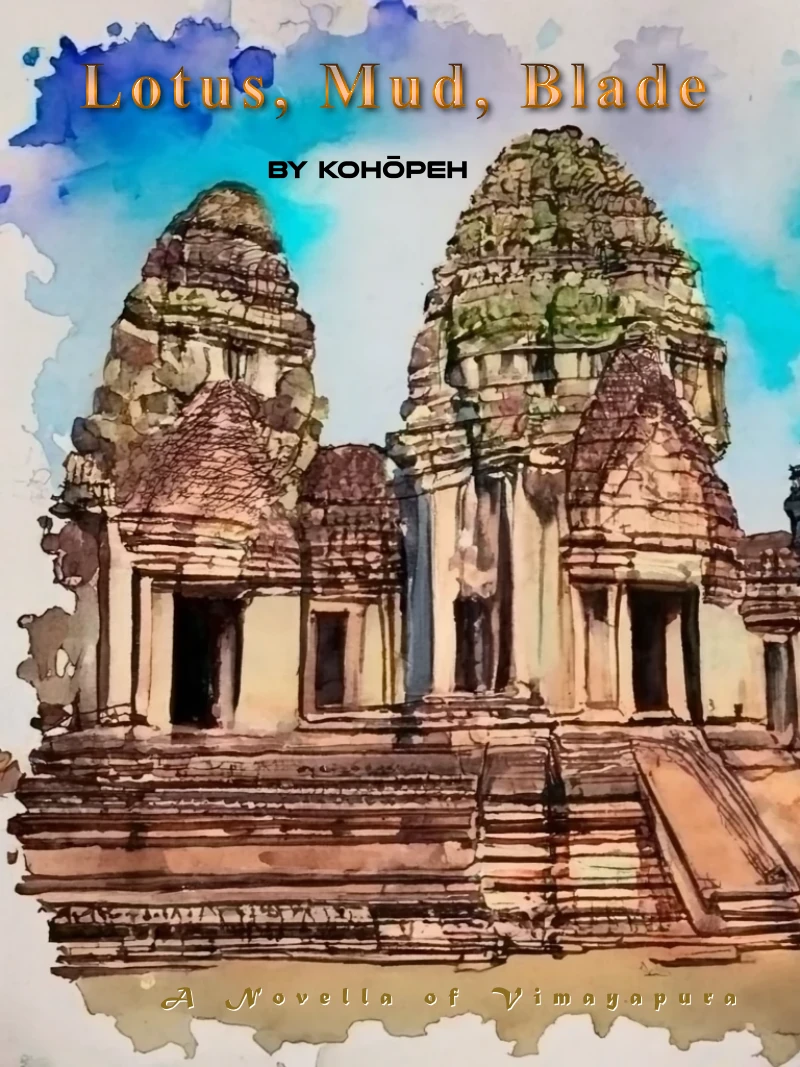 | This was a placeholder cover, while the novella wasn't written yet. |
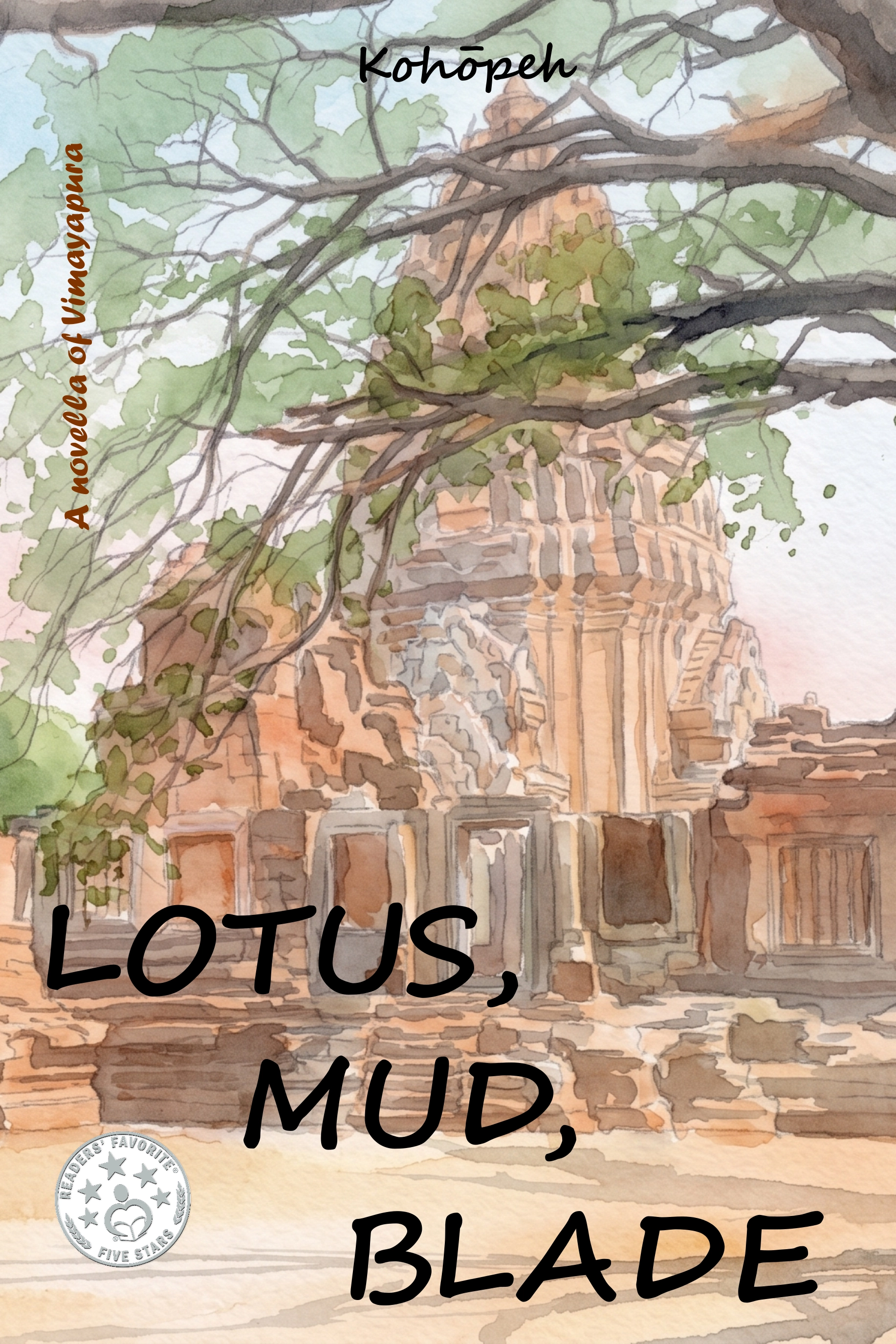 | Before release in June 2026, this cover was adopted. It reminded me of my first reads, Alexandre Dumas, Victor Hugo on cheap paperback editions with watercolour covers. |
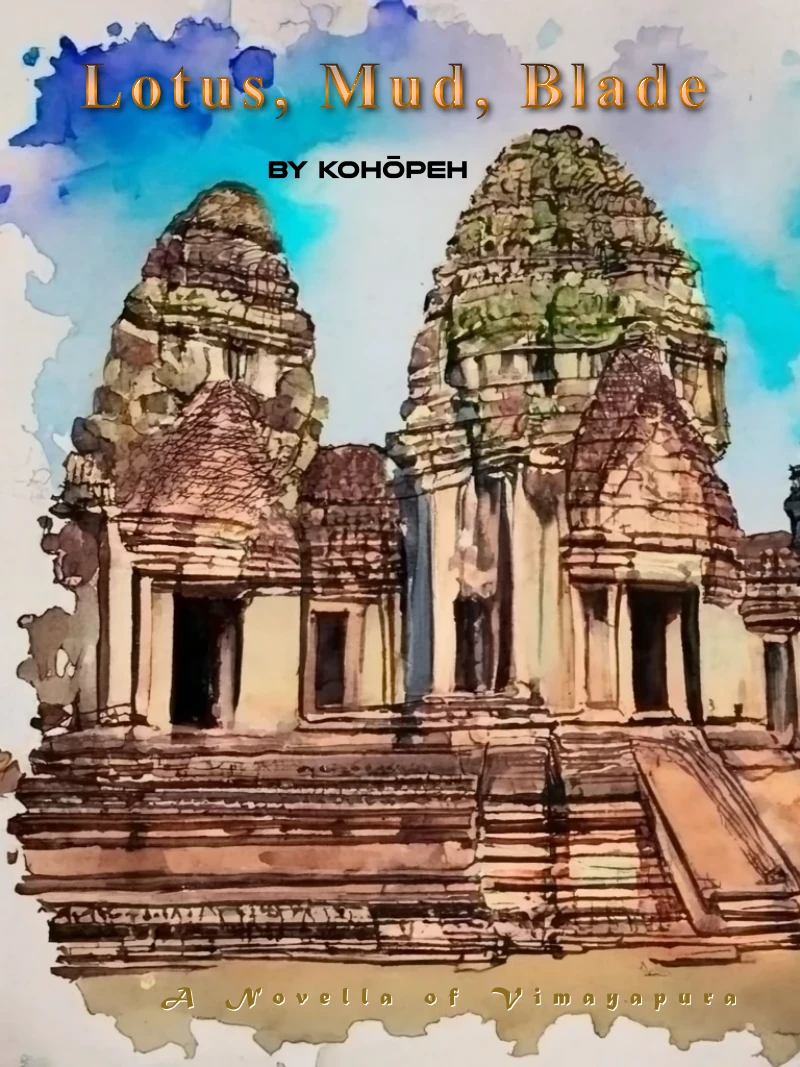 | It was explained to me in great details how the previous cover was misleading, drawing readers who might have liked the content away and drawing in some who might not, by suggesting an easy going, maybe cozy hist fic. The subtitle who sets the tone was also not on the cover. So on 2026-08-10 I created a new cover, with a more legible font and moody colours. Finally I decided not to include the 5-star seal from Readers' Favorite because visually it was clashing. I am still extremely proud of it, and will have it on the back cover of the paperback version (once uploaded). |